In-Depth Analysis: Superabrasive Properties, the Four Major Bond Manufacturing Methods, and Anti-Vibration Internal Grinding Best Practices for Small-Diameter Mounted Points.
In modern high-precision industrial grinding (Precision Grinding), the widespread application of hard materials—such as cemented carbide (tungsten carbide), high-chromium steels, high-speed tool steels, and aerospace-grade superalloys—presents severe manufacturing challenges. Traditional Alundum (Aluminum Oxide) or Green Silicon Carbide (GC) wheels often fail due to insufficient rigidity and rapid wear, leaving production lines bottlenecked with dimensional errors and workpiece surface burns.
To shatter these manufacturing constraints, implementing superabrasive wheels (Superabrasive Wheels) utilizing synthetic diamond and Cubic Boron Nitride (CBN) has become the gold standard for high-end production optimization. In this technical guide, the Honway engineering team deconstructs the chemical characteristics of superabrasives, compares the four core bond manufacturing systems, and shares critical internal grinding heartwood for micro-diameter “mounted points,” helping you build a highly efficient, tight-tolerance grinding workflow.
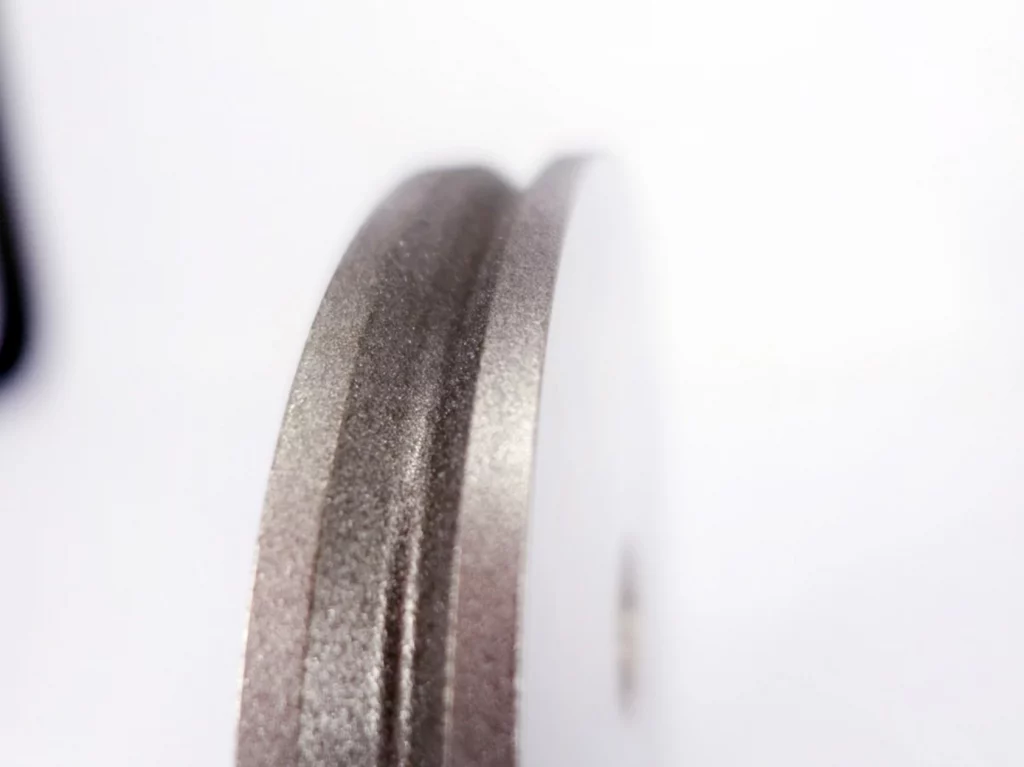
Figure 1: Honway Group provides a comprehensive portfolio of resin, metal, vitrified, and electroplated superabrasive grinding wheels, delivering ultra-precision surface conditioning solutions for tungsten carbide and high-hardness alloy steels.
📋 Technical Guide Quick Navigation
- Superabrasive Material Showdown: Chemical Affinities and Material Selection for Diamond vs. CBN
- Structural Infrastructure: Deconstructing the Four Major Bond Systems and Performance Comparisons
- Micro-Machining Configurations: Achieving Rigidity and Vibration Damping in Small-Diameter Mounted Points
- The Parametric Code: The Impact of Concentration Indexes and Bond Hardness on Machining Geometry
- Selection Matrix: Honway’s Advanced Superabrasives and Internal Grinding Quill Reference Guide
- Extended Reading: Remediation Workflows for Wheel Glazing and Surface Roughness Metrology Calibration
I. Superabrasive Material Showdown: Chemical Affinities and Material Selection for Diamond vs. CBN
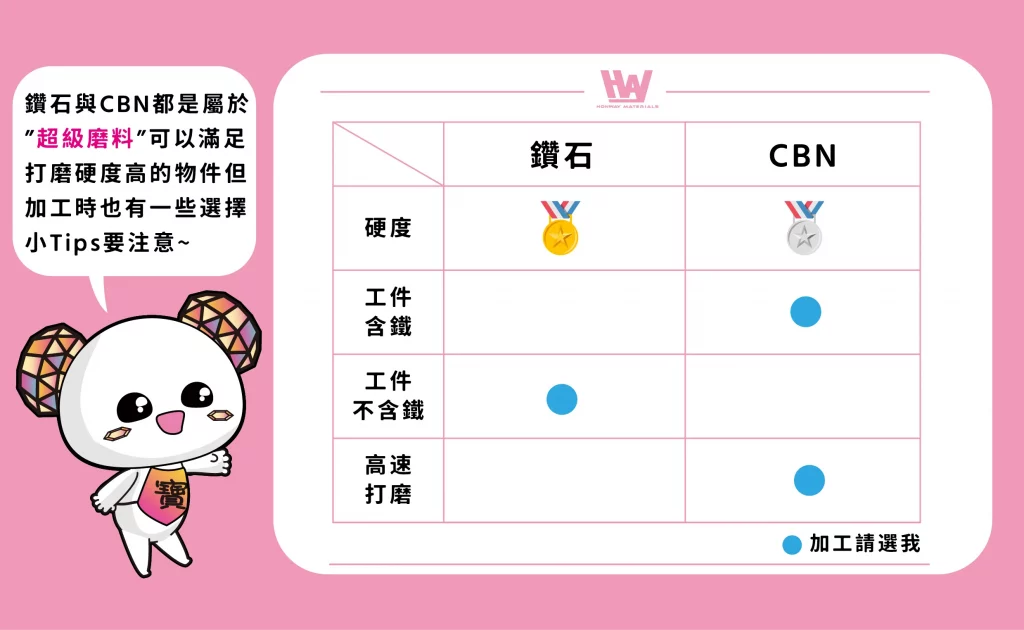
Production engineers frequently fall into the procurement trap of assuming that “diamond is the hardest material on earth, so choosing diamond wheels is always correct.” In high-end B2B precision engineering, while abrasive hardness is crucial, Chemical Affinity is the true metric dictating tool life and process stability:
1. Diamond Grinding Wheels — The Rulers of Non-Ferrous and Hard-Brittle Materials
Synthetic diamond boasts a Mohs hardness of 10 (microhardness of approx. 10,000 kg/mm²), providing ultimate compressive strength and wear resistance. However, diamond is fundamentally elemental Carbon. When grinding materials containing Iron (such as stainless steels and high-alloy steels) at temperatures exceeding 700°C, a violent chemical reaction occurs between the carbon atoms and the iron matrix. This triggers a “carbide reversal,” causing the diamond grits to dissolve rapidly and lose their cutting edges. Therefore, the optimal battlegrounds for diamond wheels are strictly non-ferrous, hard-brittle materials: cemented carbide (tungsten carbide), ceramics, optical glass, sapphire wafers, and quartz.
👉 Direct Access: 🛒 Honway Superabrasives – Diamond and Boron Nitride Grinding Wheel Zone
2. Cubic Boron Nitride (CBN) Grinding Wheels — The Saviors of Ferrous and High-Hardness Black Metals
CBN’s hardness is second only to diamond (microhardness of approx. 4,700 kg/mm²), but it exhibits complete chemical inertness toward iron-group elements and remains thermally stable up to 1,300°C. It will not undergo thermal-chemical degradation when reacting with iron at extreme temperatures. This allows CBN wheels to deliver exponential tool life extensions compared to diamond when machining high-speed tool steels (SKH), alloy die steels (SKD), bearing steels, high-chromium cast irons, and nickel-based superalloys, eliminating thermal micro-cracking and the downtime caused by excessive wheel reconditioning.
👉 Direct Access: 🛒 Honway Superabrasives – Diamond and Boron Nitride Grinding Wheel Zone
II. Structural Infrastructure: Deconstructing the Four Major Bond Systems and Performance Comparisons
Once the ideal superabrasive grain (Diamond or CBN) is determined, the next step is selecting the binding matrix—the Bond—that retains the abrasive grains. Leveraging deep surface materials engineering acumen, Honway Group supplies the four dominant bond formulations:
| Bonding System | Core Physical Matrix Attributes | Optimal Grinding Operations |
|---|---|---|
| 1. Resin Bond | Formulated via high-temperature curing of organic resins (e.g., phenolic, polyimide). Delivers excellent elasticity, superior damping traits, and robust self-sharpening (Self-Sharpening) mechanisms. | Precision toolroom sharpening, profile grinding, ultra-mirror polishing, and scratch-free surface finishes. |
| 2. Metal Bond | Manufactured via powder metallurgy sintering of copper, tin, and iron powders. Features extreme retention force, high abrasion resistance, and unyielding shape-retention. | High-depth heavy-feed roughing, wafer edge grinding (V-Groove profiling), and glass/quartz stock removal. |
| 3. Vitrified Bond | Fused via specialized vitreous ceramics at extreme temperatures. Blends the high rigidity of metal bonds with the free-cutting traits of resin systems. The micro-porous matrix provides ideal chip clearance and coolant transport. | Automated aerospace and automotive mass production lines; optimized for high-precision, automated trueing. |
| 4. Electroplated Bond | Utilizes electrochemical deposition to secure a single layer of high-density abrasive grains onto a rigid steel core. Achieves maximum grain exposure and unmatched aggressive cutting force. | Intricate geometric form grinding (e.g., single-sided tapered profiles), profile cutting, and high-removal single-pass workflows. |
III. Micro-Machining Configurations: Achieving Rigidity and Vibration Damping in Small-Diameter Mounted Points
In micro-die internal grinding, injector nozzle slide honing, and ultra-small bore deep-hole conditioning, micro-mounted points (Mounted Points / Diamond Internal Quills) are essential components. However, when shank diameters scale down to 3mm or 6mm and overhang ratios increase, engineers routinely encounter catastrophic failures: high-frequency spindle resonance, bore bell-mouthing, profile collapse, or complete shank snapping.
💡 Honway’s Proprietary Vibration Damping Recipe for Internal Honings:
Conquering small-diameter deep-hole grinding hinges on two parameters: Core Substrate Rigidity and Linear Speed Synchronization. Honway’s flagship micro-quill series swaps traditional soft steel shanks for ultra-fine micrograin solid carbide (tungsten carbide shanks). This yields a 3x leap in bending stiffness, neutralizing deflection and chatter marks from the source. Furthermore, because the wheel diameter is minimal, spindle velocities must be ramped up aggressively (typically 40,000 to 80,000 RPM) to sustain the golden linear cutting velocity (25–35 m/s) required by superabrasives, ensuring zero micro-chipping and absolute bore roundness.
👉 Direct Access: 🛒 Honway Internal Grinding – Grinding wheel with handle Product Zone
👉 Direct Access: 🛒 Honway Precision Finishing – Flexible grinding wheel with handle Product Zone
IV. The Parametric Code: The Impact of Concentration Indexes and Bond Hardness on Machining Geometry
During B2B technical procurement and blueprint specification tracking, beyond selecting grain types and mesh sizing (e.g., #400, #1200), there is a critical paramer on the superabrasive data tag that is routinely overlooked: Concentration.
Standard B2B international metrology dictates that a Concentration Index of 100 corresponds exactly to 4.4 carats (0.88 grams) of diamond or CBN abrasive embedded per 1 cubic centimeter of the abrasive layer volume.
- High Concentration (e.g., 125 ~ 150): Densely packed abrasive topography. Delivers exceptional profile retention and tool life longevity; highly suited for aggressive form-grinding and heavy material removal.
- Low Concentration (e.g., 50 ~ 75): Wide grain spacing with maximized chip clearance. Promotes rapid heat dissipation and highly aggressive cutting actions; ideal for small-contact creep-feed grinds, ultra-narrow slotting, and heat-sensitive component materials.
V. Selection Matrix: Honway’s Advanced Superabrasives and Internal Grinding Quill Reference Guide
Backed by deep surface material sciences competency, Honway Group calibrates superabrasive specifications against your existing machine spindle specs, coolant delivery chemistry, and material hardness metrics. Click below to explore targeted product portfolios and link up with our application engineers:
- 🔹 Standard Configuration for Tungsten Carbide, Ceramics, and Brittle Optics: 👉 🛒 Honway High-Precision Diamond and Boron Nitride Grinding Wheel Matrix ── Engineered for ultra-extended geometric tool life and shape-holding fidelity; eliminates edge chipping completely.
- 🔹 The Only Valid Resolution for Heat-Treated High-Alloy Steels and Tool Steels: 👉 🛒 Honway Cubic Boron Nitride (CBN) Advanced Wheel Lineup ── Sustains 1,300°C thermal thresholds, deploying chemical inertness to eradicate workpiece burns and scale batch yields.
- 🔹 The Rigid Nemesis of Micro-Deep Holes and Bore Deviations: 👉 🛒 Honway High-Rigidity Carbide-Shank Grinding wheel with handle ── Ultra-fine micrograin solid carbide shanks absorb high-frequency vibrations, assuring flawless bore parallelism.
- 🔹 The Polishing Ace for Complex Injections and Localized Retouching: 👉 🛒 Honway Flexible grinding wheel with handle Series ── Blends robust compliance matrix parameters with shock-absorbing bonds to iron out tool marks and achieve mirror-gloss statuses.
- 🔹 Automated High-Volume Profile Reconditioning Infrastructure: 👉 🛒 Honway Flagship Diamond roller Grinding wheel dressing Systems ── Achieves absolute geometric profile repeatability, completely bypassing human errors associated with standard single-point wash tools.
VI. Extended Reading: Remediation Workflows for Wheel Glazing and Surface Roughness Metrology Calibration
Configuring the ideal superabrasive wheel blueprint and grinding parameter heartwood represents only the opening move toward advanced surface finishing mastery. To lock down long-term production yield controls, downstream reconditioning and systemic documentation are imperative. Explore Honway’s curated technical publications:
🛠️ Precision Industrial Process Integration Guides:
- 👉 Wheel Glazing Remediation (Core Post-Process Calibration): Grinding Wheel Glazing and Process Deviation? How Diamond Dressers Restore Machining Precision: A Guide to Trueing and Dressing Calibration (An intuitive breakdown tracking how CVD form tools, chisel profiles, and natural wash pens reactivate dull wheels)
- 👉 Metrology Standardization & Roughness Conversions: Comparison Chart of Grinding Polishing and Surface Roughness (Cross-reference wheel mesh sizes against precision Ra, Rz, old S, and ▽ micro-to-nanometer scale expressions)
- 👉 Smart Automated Downstream Hardware: Automated Deburring & Ultra-Precision Manufacturing: Achieving Nano-Scale Surface Integrity via Jet and Meta Polishing (Transition seamlessly from fine abrasive grinding into automated jet-driven polishing and localized deburring arrays)
🛡️ Honway Group: Your Trusted Partner in Advanced Surface Finishing Technology
Honway Group has long been dedicated to high-end industrial raw materials, advanced semiconductor consumables, and precision surface processing equipment. We understand that in demanding industrial sectors, deploying a high-quality grinding wheel is only half the battle. Precision, wear-resistant trueing and dressing technologies are vital to unlock 120% of your consumables’ performance.
Honway provides comprehensive material evaluation centers and a seasoned field application engineering team. We can calibrate dresser specifications and conduct on-site trial runs based on your specific grinder configurations, wheel bond matrix types, and workpiece tolerance requirements. Partner with us to achieve precision and operational efficiency across your manufacturing workflows.
🏢 Honway Group B2B Technical Engagement & RFQ Desk
- 📱 B2B Technical Hotline: +886-7-223-1058 (Monday to Friday, 09:00 ~ 18:00 UTC+8)
- ✉️ Corporate Inquiries & RFQs: [email protected]
- ⏰ Operational Hours: Monday through Friday, 09:00 to 18:00
- 🌐 Official Website Home: https://honwaygroup.com/
- 👥 Official Corporate Media: Follow the Honway Group LinkedIn Official Page to tap into immediate updates reviewing superabrasives engineering, advanced grinding metrics, and localized automated surface integration tools.