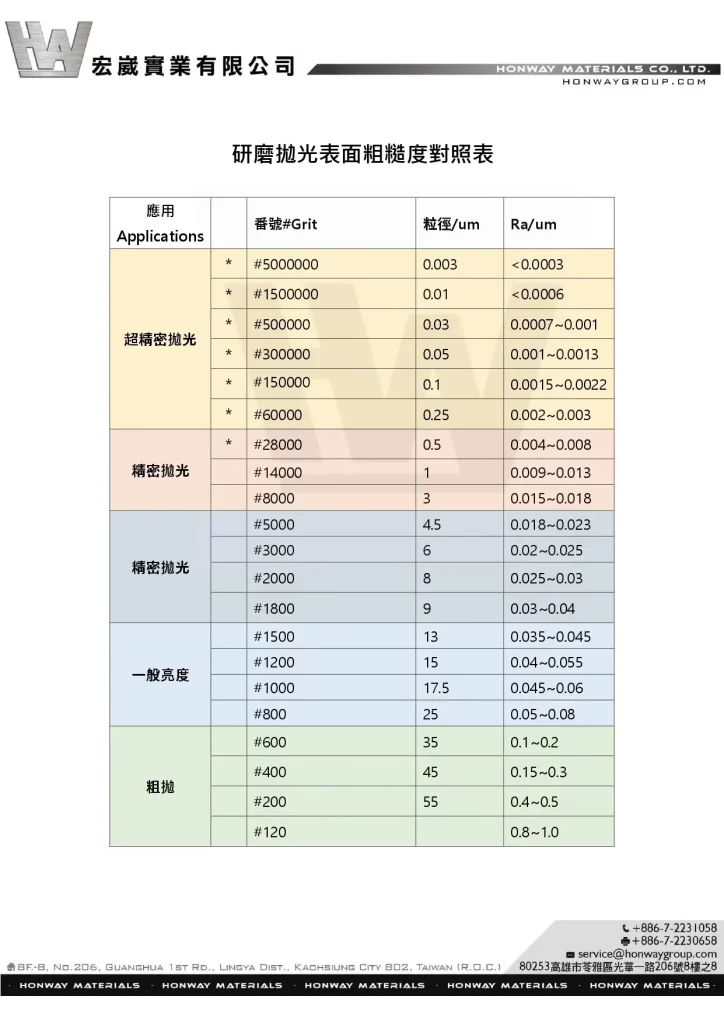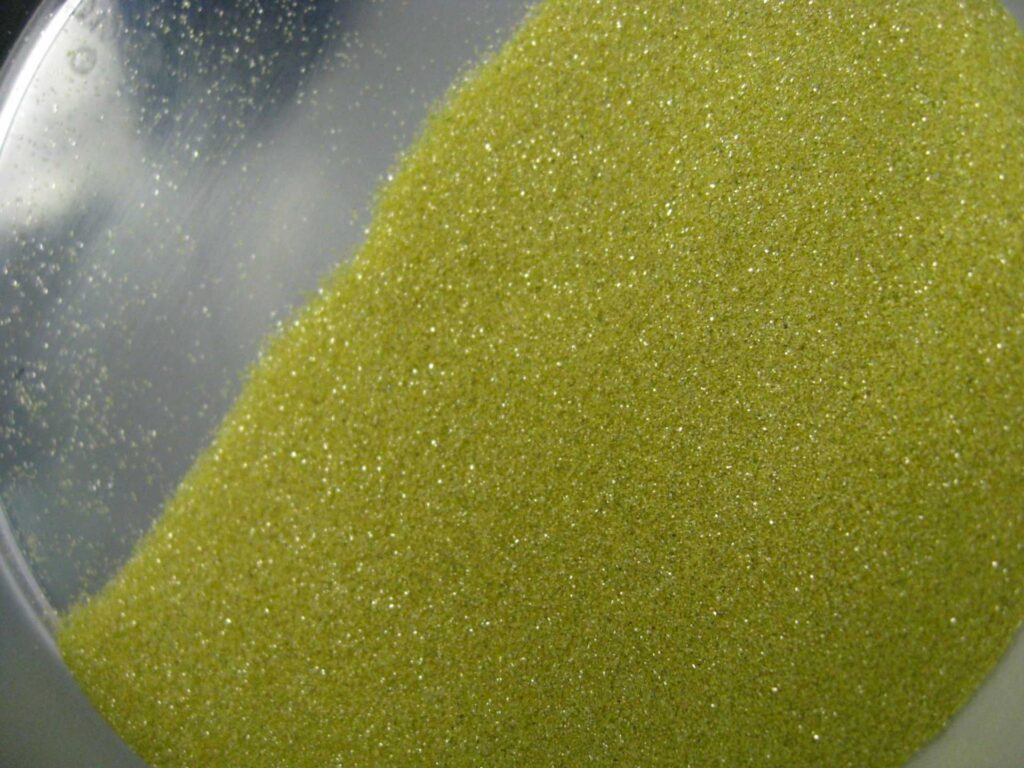
Are your industrial polishing lines or quality control characterization labs encountering suboptimal material removal rates, microstructural phase smearing, or erratic surface finish variations? In advanced component fabrication and metallographic specimen preparation, achieving an absolute mirror finish while preserving micro-geometric integrity is paramount. Process R&D engineers frequently face high-stakes manufacturing bottlenecks:
- Subsurface Damage and Gouging: Aggressive abrasive cutting overextended into final steps can introduce deep structural micro-cracks and lingering subsurface deformation.
- Interfacial Lubricant Starvation: Low-tier suspensions break down under heavy localized downforce, inducing thermal accumulation and altering target phase properties.
To eliminate these industrial manufacturing variances, Honway Materials pairs our high-shear carrier Grinding Compounds with our structurally engineered Metallographic Polishing Slurries, Compounds, and Powders. Synchronizing your abrasive carrier chemistry with microstructural material removal kinematics is the definitive path to flawless, repeatable analytical validation.
Table of Contents
- 1. Tribological Mechanics: Macro-Removal Carrier Shearing vs. Micro-Smoothing
- 2. Materials Science Framework: Optimizing Formulations for Hard and Soft Phases
- 3. Plant Troubleshooting Guide (FAQ): Eradicating Abrasive Agglomeration & Burns
- 4. B2B Sourcing, Bulk Volume Contracts & Custom Engineering Solutions
1. Tribological Mechanics: Macro-Removal Carrier Shearing vs. Micro-Smoothing
Achieving nanometer-scale surface roughness (Ra) on advanced alloys, engineering ceramics, or semiconductor packages requires a perfectly balanced abrasive vehicle. The carrier formulation determines how abrasives slide, roll, and cut across the active contact zone.
A. High-Concentration Industrial Grinding Compounds
Formulated with premium synthetic diamond particles suspended in water-soluble or oil-based chemical matrices, grinding compounds act via high-force sliding shear. The chemistry provides exceptional wetting properties and viscosity retention under high temperatures.
- 👍 Maximum Material Removal Rate (MRR): Keeps diamond particles distributed uniformly across the polishing pad or lap plate, preventing grain clustering and maximizing cutting points to rapidly erase prior grinding marks.
- 👍 Enhanced Friction Management: Specialized cooling additives draw heat away instantly from the interface, preserving tight structural tolerances and avoiding workpiece thermal burns.
B. Technical Metallographic Polishing Slurries, Compounds & Powders
Designed for intermediate to final-stage super-finishing, Honway’s metallographic polishing slurry, compound, and powder series introduces micro-viscoelastic compliance tailored to precise material phases.
- 👍 Distortion-Free Mirror Finishes: Cushions ultra-fine abrasives (such as polycrystalline diamond, calcined alumina, or colloidal silica), allowing particles to gently roll and iron out asperities via mild plastic flow without causing phase relief.
- 👍 Adaptable Carrier Systems: Available in pre-mixed aqueous suspensions for automated dosing lines, high-viscosity pastes for target manual application, or high-purity dry powders for specialized in-house laboratory formulation.
2. Materials Science Framework: Optimizing Formulations for Hard and Soft Phases
Procurement directors and laboratory automation supervisors require reproducible materials data to standardize corporate operating procedures (SOPs). The technical reference matrix below outlines the operational boundaries of Honway’s chemical mediums:
| Technical Material Target | Structural Application Phase | Recommended Abrasive Medium Specification | Primary Carrier Chemistry Advantage |
|---|---|---|---|
| Tungsten Carbide, Hard Alloys & SiC | Coarse to Intermediate Flatting | Honway Industrial Diamond Grinding Compounds | Oil-soluble or universal emulsion with extreme pressure (EP) resistance |
| Multi-Phase Tool Steels, Ceramics | Intermediate Lapping & Pre-Finishing | Honway Polycrystalline Diamond Suspensions | High-suspension aqueous carrier; continuous diamond self-sharpening |
| Ductile Metals, Sapphire & Glass | Final Super-Finishing (Ra < 1nm) | Honway Calcined Spherical Alumina Slurry / Powder | Mildly alkaline chemical-mechanical fluid; prevents micro-scratching |
3. Plant Troubleshooting Guide (FAQ): Eradicating Abrasive Agglomeration & Burns
Compiled by Honway’s Technical Engineering Group, these field-tested diagnostic protocols target common preparation anomalies on automated industrial finishing lines:
Q1: Our lines are experiencing rapid particle drop-out and uneven scratching when mixing dry powders into liquid carriers. How do we eliminate this anomaly?
【Process Engineering Solution】 Random scratching from dry powders points to incomplete particle wetting, which creates abrasive agglomerates that act as giant scratch sources. When utilizing raw polishing powders, ensure you use high-shear mechanical blending combined with ultrasonic agitation. This fully wets the microstructural faces and creates a stable, clump-free suspension.
Q2: When should our process engineers specify an oil-based grinding compound over a water-soluble formulation?
【Process Engineering Solution】 Oil-based grinding compounds feature an exceptionally resilient boundary film, providing superior lubrication for heavy-load cutting of ultra-hard materials like tungsten carbide or hard tool steels. However, if your components are chemically sensitive or require rapid, water-based post-process cleaning, a water-soluble carrier formulation is optimal to avoid extensive solvent cleaning cycles.
Q3: How do we mitigate phase relief when polishing multi-phase samples featuring varying material hardness?
【Process Engineering Solution】 Prolonged polishing on highly compliant cloths selectively erodes the softer matrix. To preserve phase flatness, execute the bulk of your material removal using high-concentration diamond compounds on rigid, napless pads. Keep the final super-finishing step on soft pads using Honway Spherical Alumina Slurries under 60 seconds to clean up remaining micro-scratches without introducing topography variation.
4. B2B Sourcing, Bulk Volume Contracts & Custom Engineering Solutions
In high-throughput semiconductor, automotive, and materials testing facilities, reproducibility is paramount. Minor changes in abrasive particle distribution or carrier fluid chemistry can halt automated lines. Honway Materials manages corporate supply chain risks by manufacturing a comprehensive selection of fully customizable compound viscosities, grit grading configurations, and technical volumes engineered to tight industrial tolerances.
- Request Specialized Evaluation Samples: Submit your substrate metallurgy profiles, current platen linear velocities, and target Ra thresholds, and our technology office will arrange custom compound test kits for your facility.
- Secure Long-Term Sourcing Agreements: Protect operational budgets and guarantee batch-to-batch quality metrics through contract volume distribution protocols managed by Honway’s industrial success team.
👉 Connect with Honway’s Application Specialists to Optimize Your Finishing Workflow
💡 Advanced Material Science Reference Suite (Technical Reading Center): To maximize the finishing kinematics of your Honway consumable assets, ensure your mechanical parameters and chemical selections align perfectly. Explore our comprehensive industrial guides:
Verified Honway Product Portfolios for Global Inquiries & Sample Orders
Browse our verified online catalog below to order sample quantities directly with premium worldwide shipping logistics, or connect with our customer success desk for contract bulk pricing arrangements.
- Grinding Compounds Portfolio: Diamond Grinding Compounds / Pastes (Oil & Water Soluble)
- Polishing Mediums Portfolio: Metallographic Polishing Slurries, Compounds & Powders
- Polishing Pads Portfolio: Metallographic Polishing Pads & Cloths (HW Series Showcase)
- Polycrystalline Powder Matrix: Polycrystalline Diamond Powder (Raw Grain Category)
- Monocrystalline Abrasives: Monocrystalline Diamond Powder Showcase
- Advanced Grinding Media: Advanced Grinding Solutions / Coolants Portfolio
- Superabrasive Tooling: Diamond and Boron Nitride (CBN) Grinding Wheels
- Precision Internal Tools: Precision Diamond Grinding Rods Catalog
- Oxide Polishing Slurry: Aluminum Oxide Polishing Slurry (Spherical Series)
- Peripheral Consumables: Grinding and Polishing Peripheral Consumables
Honway Customer Success Office (Taiwan HQ)
Official B2B Inquiry Email: [email protected]
Business Hours: Monday – Friday, 09:00 – 18:00 (GMT+8)
International Direct Line: +886 7 223 1058 | Official Social Media: Honway Group Facebook