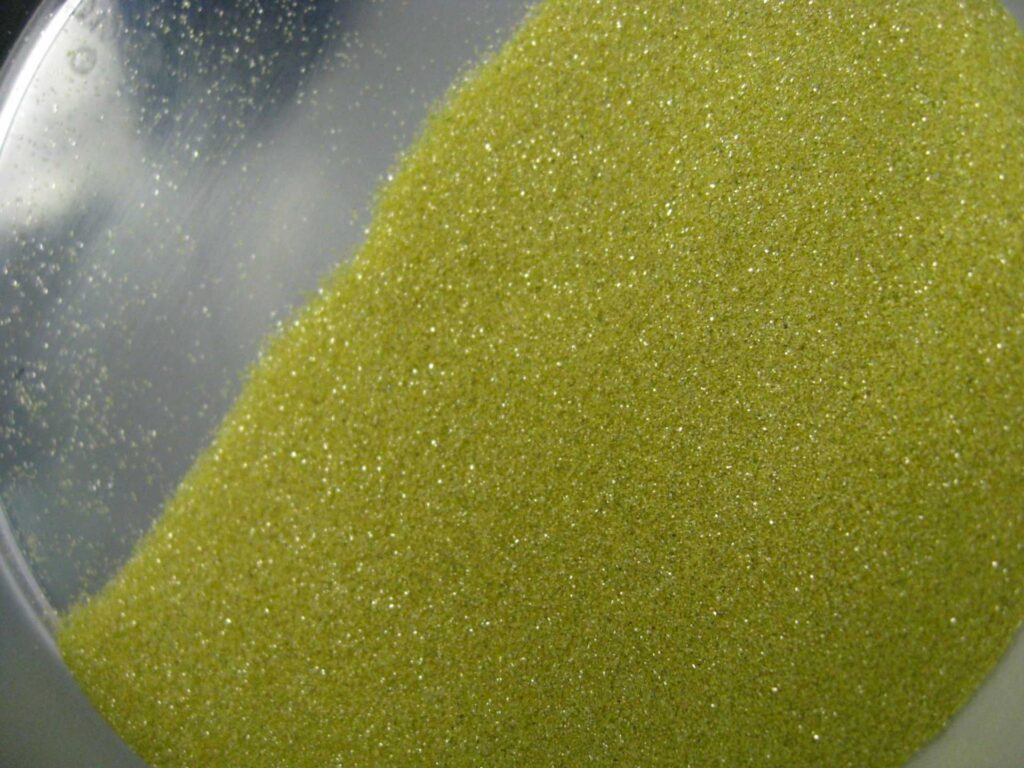
Did you know that diamonds are far more than just sparkling gemstones worn on fingers? In high-tech manufacturing, microscopic diamond powders serve as the ultimate abrasive to grind, lapping, and polish critical advanced materials. Even more fascinating, scientists actually utilize controlled “explosions” to synthesize these sub-micron diamonds. Let’s dive into the fascinating science behind Detonation Nanodiamonds (DND) and how they are transforming modern surface finishing.
Table of Contents
- 1. What are Detonation Nanodiamonds (DND)?
- 2. The Explosive Manufacturing Process of Nanodiamonds
- 3. Monocrystalline vs. Polycrystalline & Nanodiamond Powders
- 4. Honway’s Proprietary Purification: Black vs. Grey Series
- 5. Four Industrial Superpowers of Nanodiamond Applications
1. What are Detonation Nanodiamonds (DND)?
Unlike natural diamonds mined from the earth, industrial nanodiamond powders are synthesized using two primary explosive methods to meet high-volume demand:
Method A: Direct Detonation Synthesis (DND)
Scientists place carbon-rich explosives inside a closed, oxygen-free detonation chamber. Upon triggering the explosion, the shockwave causes carbon atoms to collide at extreme velocities and under immense pressure, instantly compressing them into ultra-fine diamond clusters measuring a mere 3 to 10 nanometers.
Method B: Shockwave Synthesis via Graphite
Instead of converting explosives directly, this method leverages the immense shockwave pressure to transform graphite (the material in pencil leads) into diamond. Graphite is blended with copper powder, tightly sealed in a steel tube, and surrounded by tons of explosives. Within microseconds, the shockwave creates a high-pressure, high-temperature environment that forces the graphite structures to rearrange into diamonds.
Why blend it with copper powder? Freshly synthesized nanodiamonds are extremely hot; if left at high temperatures, they quickly revert to useless carbon black. The copper powder acts as an instant thermal sink, rapidly quenching the diamonds to preserve their pristine crystal structure.
2. The Polycrystalline Advantage: “Potato-Shaped” Diamonds
While diamonds can be grown slowly via Chemical Vapor Deposition (CVD) to produce perfect, robust structures, the process is far too slow and cost-prohibitive for generating industrial abrasive powders. Detonation synthesis allows for the massive production of kilograms of powder per detonation.
The resulting polycrystalline nanodiamond powder possesses an unparalleled geometric advantage: its particles are spherical and rounded, resembling tiny “potatoes” rather than jagged shards.
- Gentle, Scratch-Free Polishing: Traditional crushed single-crystal diamonds behave like broken glass with sharp, rigid angles. Conversely, Honway’s potato-shaped polycrystalline diamonds lack sharp edges. When polishing ultra-precise substrates (such as hard drives, precious gems, or semiconductor wafers), they prevent micro-scratches and eliminate pit-gouging on surfaces with alternating hard and soft materials.
- Self-Sharpening Mechanics (Self-Abrasive Renovation): Polycrystalline diamonds do not shatter completely during heavy-duty lapping. Instead, they micro-fracture segment by segment under stress. This phenomenon is known as “self-sharpening.” The abrasive constantly creates new cutting edges while maintaining a consistent, high-tier surface finish with superior material removal rates (MRR).
💡 Polishing Resource Center: Want to dive deeper into the physics of self-sharpening mechanics? Read our most popular technical guide to boost your processing efficiency: The Dark Technology of Surface Finishing: Why Engineers Choose Polycrystalline Diamonds.
3. Conventional Diamond Powder vs. Spherical Nanodiamonds
The transition from micron-sized monocrystalline powders to spherical nanodiamonds represents a massive leap in surface engineering.
| Characteristics | Conventional Diamond Powder | Spherical Nanodiamond Powder |
|---|---|---|
| Particle Geometry | Jagged, irregular, sharp edges | Near-perfect isotropic spheres |
| Surface Characteristics | Chemically inert, low functional groups | Rich in active functional groups |
| Specific Surface Area | Standard | Significantly higher (extreme absorption) |
| Surface Finish Result | Prone to micro-scratches | Ultra-smooth, defect-free surface |
R&D Insight: Why High-End Wafer Polishing Mandates Spherical Nanodiamonds
In semiconductor wafer fabrication and precision optical manufacturing, engineers constantly battle two yield-killers: micro-scratches and slurry self-agglomeration.
Traditional micron diamond particles, regardless of how finely they are milled, retain jagged physical structures that slice micro-grooves into wafer substrates during high-speed Chemical Mechanical Planarization (CMP), causing severe edge roll-off and costly wafer scraps. Furthermore, generic nano-particles often clump together into larger, destructive aggregates due to high surface energy.
Honway’s Spherical Nanodiamond Powder features a perfectly round, isotropic ball-bearing structure. During CMP, it rolls smoothly across the substrate like microscopic ball bearings. Paired with our proprietary surface modification and dispersion technologies, Honway eliminates powder agglomeration within the polishing slurry—ensuring highly consistent wafer yields and pristine surface topography.
4. Honway’s Advanced Material Processing: Black & Grey Series
Leveraging our internal acid-purification and surface-modification technologies, Honway refines raw detonation materials into ultra-pure industrial grades. Depending on your manufacturing process and purity requirements, we offer two signature product lines:
- 【Black Nanodiamond Powder Series】: High raw energy retention, ideal for material composite electroplating, co-deposition, and industrial wear-resistance reinforcement.
- 【Grey Nanodiamond Powder Series】: Subjected to meticulous multi-stage chemical purification, making it the premier choice for high-tech semiconductor CMP slurry formulations and advanced optical lapping.
Standard Nanodiamond Size Specifications:
Available particle sizes (D50): 50nm, 80nm, 100nm, 120nm, 150nm, 200nm, 300nm, 500nm, 800nm, 1000nm.
*Note: All specifications above represent our regular inventory. Honway fully supports bespoke OEM/ODM custom formulations and custom particle size distribution (PSD) tuning based on your technical datasheets.
Seeking Specific Size Specs or Bulk Quotations for Custom Formulations?
Inquire About Nanodiamond Specifications5. Four Industrial Superpowers of Nanodiamond Applications
💡 Semiconductor CMP Reference Guide: Working with compound semiconductors like GaAs, InP, or hard sapphire substrates? Honway has engineered task-specific chemical mechanical planarization products. Check out our high-tier options here: Monocrystalline Nanodiamond Solutions for Advanced Materials.
Superpower 1: Angstrom-Level (Å) Ultra-Precision Polishing
Thanks to the spherical geometry, nanodiamonds roll smoothly across surfaces without scratching. It delivers atomic-level flatness, safely driving surface roughness down into the Angstrom-level (Å) range for semiconductor wafers, laser optics, and precision injection molds.
Superpower 2: Industrial Lubrication & Friction Reduction
When blended into industrial lubricants or engine oils, nanodiamonds transform sliding friction into rolling friction. Operating as microscopic ball bearings, they slash friction coefficients, suppress heat generation, and dramatically extend machinery lifespans under high loads.
Superpower 3: Composite Electroplating & Surface Coating
Integrating nanodiamonds into plating baths or thermal spray coatings equips tools and industrial components with extreme surface hardness, superior anti-corrosion barriers, and enhanced impact toughness.
Superpower 4: Polymer Matrix Reinforcement (Rubber & Plastics)
Compounding nanodiamond powders into specialized rubber or plastic structures acts as a molecular stabilizer. It boosts wear resistance, tensile strength, and puncture barriers—ideal for high-performance industrial seals, tires, and heavy-duty components.
Summary: The Core Material for Next-Gen Nanotechnology
Detonation nanodiamond powders transcend the limitations of conventional synthetic diamond abrasives by pairing extreme diamond hardness with active nanoscale surface properties. From the smartphone microchips in your hand to bio-medical drug delivery systems, this explosive innovation is redefining the limits of ultra-precision manufacturing.
Recommended Products (Available for Direct Online Ordering & Inquiries)
Browse our verified online inventory below to order samples directly with global shipping options, or connect with our customer success team for offline commercial contract pricing.
- Polycrystalline Abrasives: Nano Diamond Powder (Polycrystalline)
- Monocrystalline Abrasives: Nano Diamond Powder (Monocrystalline)
- Industrial Reinforcement: Nano Diamond Black Powder (Monocrystalline/Polycrystalline Mixture)
Honway Customer Success Office (Taiwan HQ)
Official B2B Inquiry Email: [email protected]
Business Hours: Monday – Friday, 09:00 – 18:00 (GMT+8)
International Direct Line: +886 7 223 1058 | Official Social Media: Honway Group Facebook