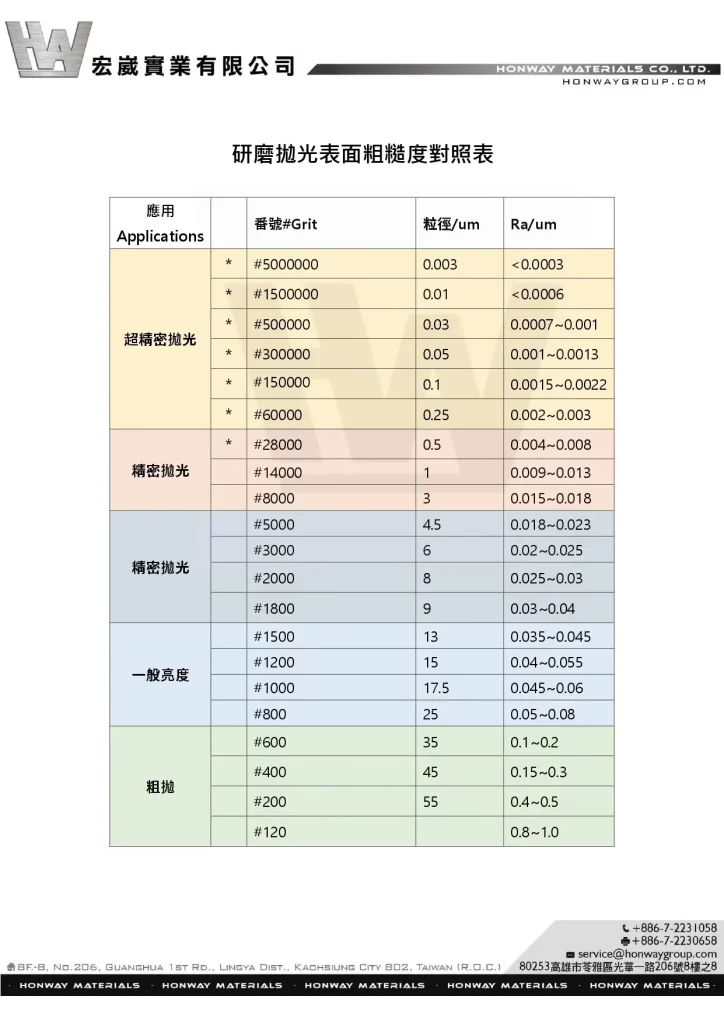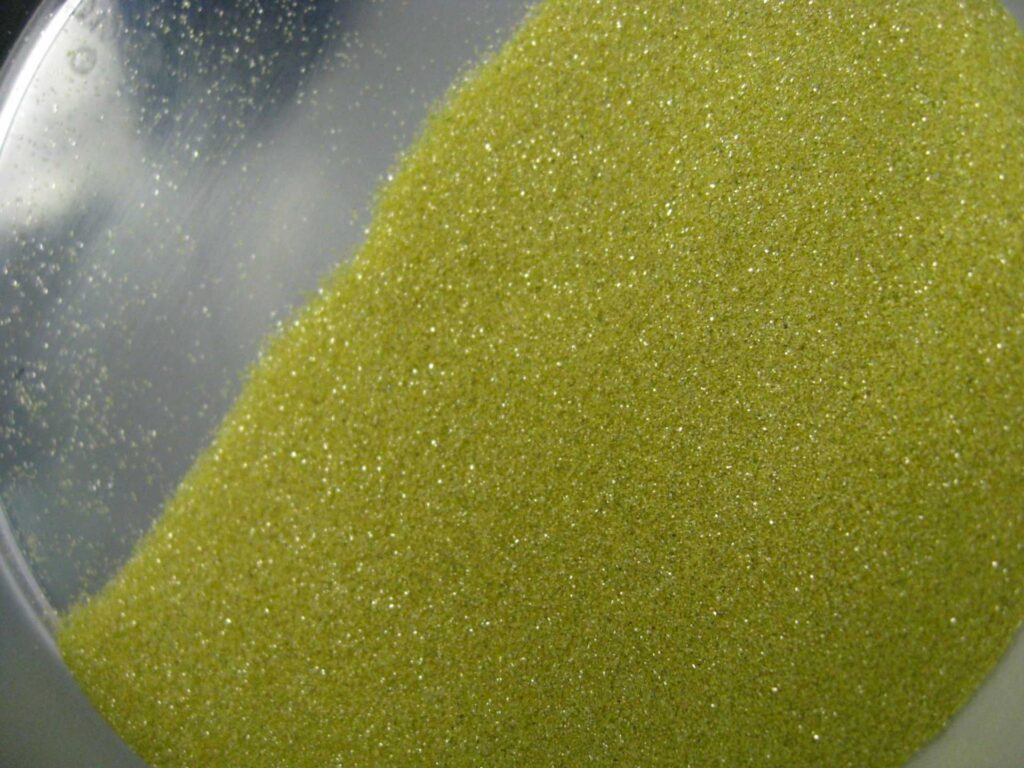
In high-end surface treatment workflows such as precision mirror mold polishing, tungsten carbide machining, and metallographic sample preparation, diamond lapping compounds (commonly referred to as diamond pastes) are indispensable consumables for attaining sub-nanometer Surface Roughness (Ra). However, process engineers and procurement managers frequently encounter a strategic technical dilemma: choosing between Oil-soluble and Water-soluble formulations.
Selecting an incorrect chemical carrier triggers catastrophic line failures—ranging from abrasive clumping and sub-optimal slag discharge to irreversible workpiece corrosion and macro-scratching. The Honway Application Engineering Team provides this exhaustive technical evaluation dissecting their core thermodynamic differences and strategic deployment windows.
Table of Contents
- 1. The 5 Cardinal Rules of Master-Level Diamond Paste Operation
- 2. Technical Specification Matrix: Oil-Soluble vs. Water-Soluble
- 3. Advanced Chemistry: Can You Layer or Mix Water and Oil Carrier Systems?
- 4. Standard B2B Engineering Support & Custom Formulations
1. The 5 Cardinal Rules of Master-Level Diamond Paste Operation
To induce a pristine mirror reflection on hard-brittle metals or specialized carbides, diamond micron powders must remain perfectly and uniformly suspended within their carrier matrix. Regardless of whether your process dictates an oil or water base, shop floor operators must strictly adhere to these 5 operational safety parameters to safeguard high yield rates:
- 🔒 Cleanroom Isolation: Final polishing must occur in a dedicated, ventilated, dust-free environment. Introducing even a single airborne contaminant particle acts as a cutting edge under load, scratching the polished surface and instantly causing batch rejection.
- 🔒 Dedicated Tool Allocation: A specific polishing tool head (e.g., wool bobs, cloth wheels, felt pads) must be coupled permanently to a single, specific grit size. Cross-contamination of coarse particles into final-stage bobs will instantly ruin surface texturing.
- 🔒 Multi-Stage Decontamination: Before shifting between different abrasive grit sizes, the workpiece, processing equipment, and operator hands must undergo complete chemical washing to ensure no residual coarse diamond particles are carried forward.
- 🔒 Downforce Mitigation: As the diamond paste grit size refines, mechanical downward pressure must decrease proportionally. Final super-finishing should rely strictly on the tool’s self-weight or subtle tangential contact forces.
- 🔒 Periphery-to-Center Progression: Polishing paths must originate from complex geometric fillets, corners, and recessed narrow slots before expanding into massive flat central geometries, guaranteeing uniform global planarization.
⚠️ Engineering Alert: Mitigating Surface Defects Induced by “Over-Polishing”
A prevalent misconception on automated lines is that extended processing durations automatically yield superior reflective surfaces. In structural physics, this triggers a failure threshold known as “Over-Polishing,” inducing two primary surface defects:
- Orange Peel Phenomenon: The surface transitions to a wrinkled, locally uneven topography resembling an orange skin. This is caused by excessive localized downforce or over-stressing highly ductile, soft metal matrices.
- Pitting Failures: The manifestation of dense, microscopic needle-like voids. This is triggered by micro-localized shear fatigue between the paste carrier and the metal grain boundaries, literally ripping loose inclusions out of the base metal matrix.
💡 Engineering Remediation Strategy: If your line experiences over-polishing defects, deploy two remediation protocols: First, execute a “Process Reset”—regress to the prior lapping stage using fine abrasive papers to shear away the damaged stress layer, then proceed with minimized downforce. Second, initiate a “Low-Temperature Stress Relief”—place the metallic workpiece into a curing oven for mild thermal annealing to dissipate residual structural stress before re-engaging final super-finishing.
2. Technical Specification Matrix: Oil-Soluble vs. Water-Soluble
Selecting the correct industrial-grade diamond lapping compound hinges on your core substrate metallurgy and the targeted complexity of your post-process cleaning line:
A. Water-Soluble Diamond Paste
- Streamlined Post-Process Decontamination: This represents the premier operational asset of water-based suspension carriers. Upon lapping completion, production lines bypass the need for costly hazardous chemical solvents; workpieces and polishing media are thoroughly cleansed using pure water, Deionized Water (DI Water), or basic aqueous detergents. This is mandatory for oil-sensitive precision electronic components.
- Superior Thermal Dissipation: Water-based chemistries feature high thermal conductivity metrics. At elevated processing velocities, they dissipate friction-induced heat rapidly, neutralizing localized thermal deformation on temperature-sensitive advanced materials.
- Eco-Compliant Workplace Ergonomics: Formulated free of Volatile Organic Compounds (VOCs), minimizing respiratory and dermatological stress for shop floor operators.
- Optimal Deployment Scenarios: Generic metal lapping, metallurgical specimen preparation (enabling fast multi-grit transitions), technical ceramics, optical glass, and semiconductor hard-brittle substrates. View our compound catalog: Water-Based Diamond Compounds.
B. Oil-Soluble Diamond Paste
- Superior Shearing Efficiency & Film Rigidity: Oil-based carriers establish a thicker, highly continuous physical boundary lubrication film that uniformly encapsulates individual diamond micron particles. Under high operational downforce, this oil film retains its rigidity, delivering supreme lubrication to slash frictional coefficients and maximize cutting fluidity.
- Deep-Texture Mirror Luminance: Because the refractive index and molecular coating uniformity of long-chain hydrocarbon oils outperform water films, oil carriers minimize micro-vibrations, yielding a deeper, high-reflectivity optical mirror finish.
- Anti-Evaporation Long-Cycle Stability: During prolonged, heavy-duty mechanical automated polishing cycles, the oil carrier resists drying out or volatilizing, maintaining stable slurry viscosity over multi-hour runs.
- Optimal Deployment Scenarios: High-end mirror mold processing (specifically Tungsten Carbide, hardened tool steels, and martensitic stainless steels), high-load mechanical seals, and premium structural gems.
| Technical Metric | Water-Soluble Paste | Oil-Soluble Paste |
|---|---|---|
| Cleaning Complexity | Extremely Low (Water / DI Water Flush) | Moderate to High (Requires Alcohol, Solvent, or Ultrasonic Wash) |
| Lubrication Film Rigidity | Standard (Prone to flying off at high velocities) | Exceptional (Withstands extreme boundary shear stress) |
| Material Removal Rate (MRR) | Moderate | Extremely High (Particularly on Tungsten Carbide) |
| Thermal Management | Excellent Heat Dissipation | Moderate (Requires monitoring of localized thermal spikes) |
| Substrate Compatibility | Optical Glass, Electronic Ceramics, Metallographic Samples, Generic Steel | Tungsten Carbide, Tool Steels, Stainless Steel, Moisture-Sensitive Alloys |
| Recommended Extender / Thinner | Pure Water or Aqueous Polishing Liquids | Kerosene, Specialized Oil Lubricants, or Oil Lapping Solutions |
💡 Selection Rule-of-Thumb: If your plant priorities mandate rapid multi-stage turnover and zero oily residues, specify water-soluble configurations. Conversely, if your target is the ultimate mirror reflection on superhard tungsten carbide dies, and the substrate chemistry is highly susceptible to aqueous oxidation (rusting), deploying an oil-soluble paste with built-in corrosion inhibitors is mandatory.
3. Advanced Chemistry: Can You Layer or Mix Water and Oil Carrier Systems?
【Honway Engineering Prohibition】: Production lines are strictly prohibited from mixing or layering water-soluble and oil-soluble formulations within the same operational cycle! Violating this rule triggers immediate chemical failures:
- Inducing “Grumous Clumping” Failures: Aqueous polar systems and non-polar organic oil chemistries possess completely incompatible thermodynamic phases. Forcing a water-based compound onto a residue-laden oil compound triggers intense phase separation or incomplete emulsion, transforming the smooth paste instantly into a viscous, grumous, clumpy sludge. The diamond abrasives lose all micro-cutting capacities and generate un-cleanable stubborn grease stains.
- Abrasive Agglomeration Driving Catastrophic Micro-Scratches: Super-finishing predictability depends on individual diamond particles remaining uniformly suspended. Water carriers leverage polar steric hindrance, while oil carriers rely on non-polar long-chain molecular spacing. Mixing them collapses the localized surface tension, causing sub-micron/nano-scale diamond powders to rapidly aggregate into large clusters (Agglomeration). These macroscopic clumps act like heavy-grit rocks under high-speed rotation, scoring deep micro-scratches into your workpiece and ruining hours of labor.
- Irreversible Ruin of Specialized Polishing Bobs (Felt/Cloth): Wool bobs and polyurethane cloths feature intricate porous micro-fibers. Introducing an oil paste saturates these pores with a hydrophobic oil film. If a water-soluble paste is subsequently layered over it, the aqueous carrier is instantly repelled, leaving diamond powders floating chaotically on the surface. The tool completely loses its grain-retention capability, rendering expensive bobs permanently useless. View our full engineering inventory here: Grinding & Polishing Peripheral Consumables.
🔍 Standard Processing Protocol for Carrier Transitions
If your process mapping demands transitioning from an oil-soluble rough lapping stage to a water-soluble final super-finishing tier, you must execute this 3-step transition:
Step 1. Intense Solvent Degreasing: Conclude the oil phase and route the workpiece through an ultrasonic degreasing bath utilizing alcohol, petroleum ether, or specialized industrial cleaners to guarantee a zero-hydrophobic oil-free surface.
Step 2. Total Tool Replacement: Transitioning grit size or carrier type mandates changing the active bob. Allocate dedicated tool heads and assign clear labeling (e.g., “Water-Soluble #3000” vs. “Oil-Soluble #3000”).
Step 3. Fixture & Bench Sanitation: Thoroughly wipe down machine platens, splash guards, and inspection fixtures to prevent stray oil-bound grains from cross-contaminating the downstream water-based super-finishing cell.
4. Standard B2B Engineering Support & Custom Formulations
Securing high process margins requires aligning specific carrier mechanics to your production variables. Honway maintains an extensive inventory across all grit sizes, water-soluble bases, and oil-soluble formulations to seamlessly back up your manufacturing timelines.
Our Advanced Engineering Division provides comprehensive plant consulting—optimizing your equipment RPM profiles, downforce parameters, carrier selections, and polishing pad choices (ranging from high-density polyurethane carriers to custom technical cloths). Let us secure your target Ra thresholds with data-driven metrics.
- Dispatch Free Material Evaluation Samples: Send your substrate profiles and target Ra metrics to our team, and we will formulate and ship task-specific diamond compound samples directly to your plant.
- Arrange On-Site Process Calibration: Align your compound extenders and machine parameters with the direct support of Honway’s application specialists.
💡 Advanced Precision Engineering Corner (Flagship Reference Reading): To maximize the material removal rate of Honway pastes, ensure your active abrasives are perfectly tuned. Check out our peerless industrial cross-references:
Verified Honway Product Portfolios for Global Inquiries & Sample Orders
Browse our verified online catalog below to order sample quantities directly with premium worldwide shipping logistics, or connect with our customer success desk for contract bulk pricing arrangements.
- Precision Compounds & Pastes: Diamond Grinding Compounds / Pastes (Oil & Water Soluble)
- Metallography Consumables: Consumables for Metallography (Specimen Prep Catalog)
- Peripheral Consumables: Grinding and Polishing Peripheral Consumables
- Polycrystalline Abrasives: Nano Diamond Powder (Polycrystalline Series)
- Monocrystalline Abrasives: Monocrystalline Diamond Powder (Category Showcase)
- Advanced CMP Liquids: Diamond Grinding Solutions / Slurries
- Oxide Polishing Slurry: Aluminum Oxide Polishing Slurry (Spherical Series)
- Metallographic Powders: Metallographic Alumina Polishing Powder
- Precision Grinding Tools: Diamond/CBN Grinding Wheels & Precision Grinding Rods
Honway Customer Success Office (Taiwan HQ)
Official B2B Inquiry Email: [email protected]
Business Hours: Monday – Friday, 09:00 – 18:00 (GMT+8)
International Direct Line: +886 7 223 1058 | Official Social Media: Honway Group Facebook