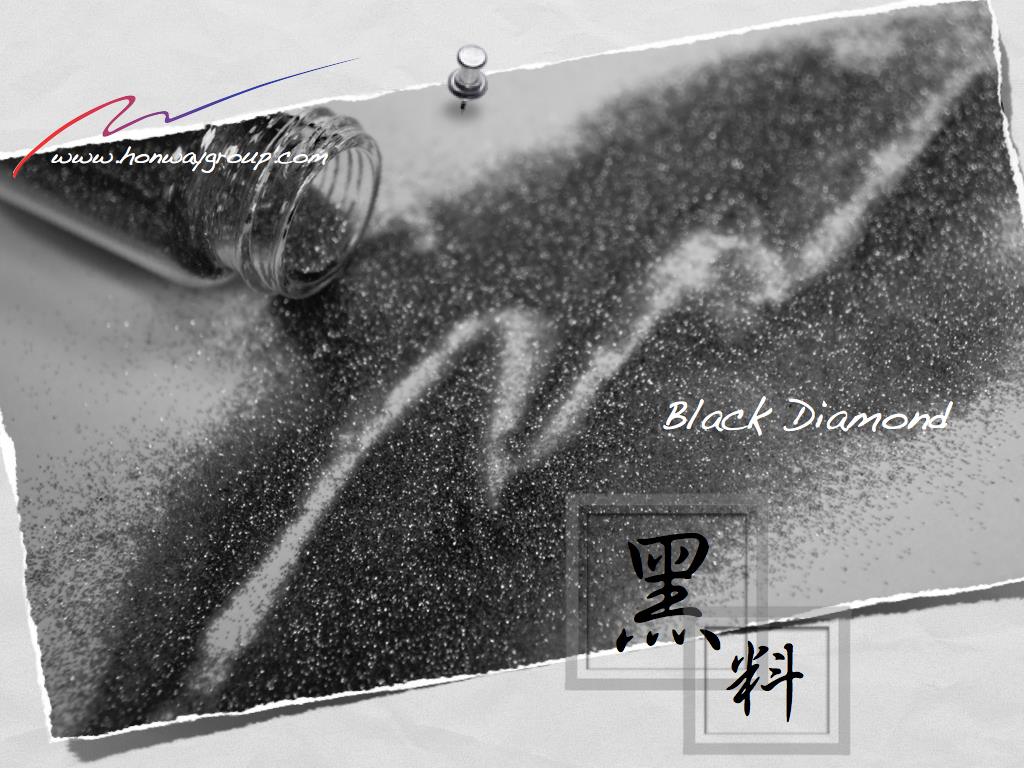
China recently announced export controls on specific synthetic diamond products and related process equipment, covering micropowder, single crystals, wire saws, grinding wheels, and DC Arc Plasma Jet Chemical Vapor Deposition (DCPCVD) equipment and technology.
As the world’s largest producer of synthetic diamonds, China controls up to 90% of the global industrial diamond supply. This policy will directly impact the global supply chain layout for grinding/polishing consumables and the semiconductor industry, prompting relevant countries and companies to re-evaluate material sources and independent R&D strategies.
Table of Contents
China Implements Export Controls on Synthetic Diamonds and Graphite
On October 9, 2025, China’s Ministry of Commerce and the General Administration of Customs jointly announced that starting from November 8, 2025, export controls will be implemented on **synthetic diamonds, artificial graphite anode materials**, and certain superhard material equipment and technologies. This move is seen as a “technical countermeasure” by China amidst escalating US-China tech tensions, forming a standoff against US chip blockades.
According to the announcement, the controlled items include:
1. Synthetic Diamond Micropowder (Code 2C902.a)
- Control Content: Synthetic diamond micropowder with an average particle size less than or equal to 50 micrometers (μm), approximately #400 mesh and above.
2. Synthetic Diamond Single Crystal (Code 2C902.b)
- Control Content: Synthetic diamond single crystals with an average particle size greater than 50 μm and less than or equal to 500 μm.
- Does not include lab-grown diamonds used for jewelry or decoration; i.e., those for gem purposes are not subject to control.
3. Synthetic Diamond Wire Saw (Code 2C902.c)
- Wire diameter less than or equal to 45 μm.
- Average particle size of contained diamonds less than or equal to 8 μm.
- Breaking force less than or equal to 16 Newtons (N).
4. Synthetic Diamond Grinding Wheel (Code 2C902.d)
- Diamond segment hardness less than or equal to 30 HRB.
- Average particle size of contained diamonds less than or equal to 5 μm (approx. #3000 and above).
- Maximum operating speed greater than or equal to 40 m/s.
5. DC Arc Plasma Jet Chemical Vapor Deposition Equipment (DCPCVD) (Code 2B005.b)
- Control Content: DCPCVD equipment used for synthesizing synthetic diamonds.
6. DCPCVD Process Technology (Code 2E902)
- Control Content: Process technology and parameters related to DC Arc Plasma Jet Chemical Vapor Deposition (DCPCVD).
Exporters dealing with the above items must apply for an export license from China’s commerce authorities. Export is prohibited without approval, and customs declarations must clearly mark whether the items fall under “dual-use items.”
Overview of China’s Synthetic Diamond Industry: The Core of Global Supply
According to the “China Synthetic Diamond Industry Map (2023)”, **China’s production of synthetic diamond single crystals accounts for approximately 95% of the global total**, with **Henan Province accounting for 80% of the national output**, making it the world’s most important supply base.
In the lab-grown diamond sector, China’s capacity accounts for about 50% of the global total, with Henan again being the main production area. Superhard material products such as micropowder, single crystals, wire saws, and grinding wheels are also largely supplied to high-end processing markets in Europe, the US, Japan, and Taiwan.
However, with the rapid expansion of the lab-grown diamond market between 2020 and 2024, overcapacity led to a drop of over 30% in the average export price of synthetic diamond micropowder and single crystals, putting inventory and profit pressure on some companies. This export restriction allows China to regain pricing and strategic dominance and strengthen its bargaining chips for high-tech materials.
Applications and Characteristics of Diamond Grinding and Polishing Tools
Synthetic diamonds are not only used in jewelry or the lab-grown diamond industry but are also **indispensable materials for high-precision manufacturing and the semiconductor industry**. Their main characteristics include:
- Ultra-High Hardness (Mohs Hardness 10): Capable of machining high-hardness materials such as tungsten carbide, ceramics, glass, and stone.
- Excellent Wear Resistance: Maintains stable cutting force even during prolonged grinding.
- High Chemical Stability: Does not easily react with most chemicals at room temperature.
- Extremely High Thermal Conductivity: Thermal conductivity can reach 2000 W/m·K, widely used in **semiconductor heat dissipation modules**.
However, there are also processing limitations:
- Not suitable for materials containing iron group metals (Fe, Ni, Co), as they catalyze the carbonization of diamond, reducing hardness.
- When grinding temperatures exceed 600°C, diamond easily forms carbides with Ti, Zr, rare earth elements, etc., accelerating wear.
Therefore, diamond grinding and polishing tools are primarily used for high-precision machining of non-ferrous materials such as ceramic substrates, Silicon Carbide (SiC), Gallium Nitride (GaN), and Sapphire (Al₂O₃), making them critical consumables in advanced packaging and compound semiconductor processes.
Potential Impact of Export Restrictions on Taiwan’s Industry
Taiwan’s dependence on superhard materials in the semiconductor, optoelectronics, and precision machining sectors is extremely high. China’s synthetic diamond micropowder, grinding wheels, and wire saws have long been major supply sources for Taiwan’s grinding and polishing consumables market. This export restriction may bring the following impacts:
- Rising Supply Chain Uncertainty: If Chinese exports require licensing approval, shipping processes will inevitably lengthen, potentially causing unstable delivery times and rising costs for grinding consumables.
- Increased Demand for Alternative Materials: Taiwan businesses may turn to suppliers in Europe, the US, Japan, or local sources for alternatives.
- Rising Costs in Semiconductor Advanced Packaging Processes: Since diamond materials play a key role in wafer thinning and packaging substrate grinding, import restrictions will drive up production costs and affect schedules for certain processes.
- Promoting the Development of Taiwan’s High-End Material Technology: This event could also serve as an opportunity to prompt Taiwan to accelerate the localization of **superhard material R&D, synthesis technology**, and **manufacturing capabilities for grinding and polishing consumables**, reducing reliance on a single source.
Conclusion
China’s export restrictions on synthetic diamonds are not just a single trade measure but symbolize the entry of superhard materials into the category of “**Strategic Technological Resources**.” As the global race in chips and advanced packaging intensifies, the stability of the material supply chain will directly impact industrial competitiveness.
For Taiwan, this export control storm is both a challenge and a turning point—only by strengthening material autonomy and supply chain resilience can we stand firm in future technological games.
Read More Related Topics
- Diamond >>> Abrasives – Diamond Introduction
Regarding polishing, we offer customized adjustments, modifying ratios according to processing needs to achieve maximum efficiency.
If you are still unsure how to choose the most suitable product after reading this article.
Please feel free to contact us; our specialists are ready to answer your questions.
Contact us if you need a quotation for custom orders.
Customer Service Hours: Mon-Fri 09:00~18:00
Tel: +886 7 223 1058
If there are topics you’d like to understand or if you can’t clarify over the phone, feel free to message us on Facebook!
Honway Facebook: https://www.facebook.com/honwaygroup
You might be interested in…
[wpb-random-posts]