As environmental regulations tighten globally and high-tech manufacturing moves toward ultimate yield optimization and green production, traditional electrochemical electrode materials are hitting severe performance bottlenecks.
In recent years, Boron-Doped Diamond (BDD) has emerged as one of the most advanced electrochemical oxidation anodes in both academia and industry due to its disruptive performance advantages. This comprehensive analysis explores the core mechanisms of BDD technology, the real-world operational pain points it solves, and its irreplaceable strategic value in semiconductor manufacturing and high-difficulty industrial wastewater treatment.
📌 Table of Contents
- 1. What is Boron-Doped Diamond (BDD)? The Ultimate Electrode Material
- 2. Electrochemical Oxidation Mechanism: The Power of Non-Selective Oxidation
- 3. Production Line Bottlenecks: Real-World Operational Challenges
- 4. Core Application Scenarios: Driving Industrial Value
- 5. Why Choose Honway’s Boron-Doped Diamond Substrate Solutions?
1. What is Boron-Doped Diamond (BDD)? The Ultimate Electrode Material
Boron-Doped Diamond (BDD) is an innovative functional material synthesized by embedding boron elements into a diamond lattice using advanced Chemical Vapor Deposition (CVD) technology. It seamlessly blends the extreme physical stability of diamond with the superior electrochemical activity of conductive materials, offering five core advantages:
- Extreme Oxidation Potential: It features an exceptionally wide electrochemical potential window and high oxygen evolution potential (OEP). This allows it to generate vast quantities of highly reactive hydroxyl radicals (·OH) to achieve deep mineralization of pollutants.
- Zero Secondary Pollution: The reaction relies strictly on electron transfer without the addition of extra chemical agents. It produces no secondary pollution or hazardous chemical sludge, ensuring full compliance with stringent environmental mandates.
- High-Salt Tolerance: BDD maintains excellent electrochemical activity even in industrial wastewater with extreme electrical conductivity or high salinity.
- Exceptional Corrosion Resistance: Possessing absolute chemical inertness, it operates stably over extended lifespans in ultra-strong acid and alkaline environments.
- Extended Service Life: Its ultra-robust material structure drastically reduces the system’s overall Operational Expenditure (OPEX).
💡 Technical Sourcing: Looking for a premium electrode material capable of withstanding extreme chemical environments? Explore Honway’s BDD Boron-Doped Diamond Substrate Technical Specifications.
2. Electrochemical Oxidation Mechanism: The Power of Non-Selective Oxidation
During operation, BDD electrodes induce a discharge reaction of water molecules directly on the anode surface, generating highly active hydroxyl radicals (·OH). Depending on the electrolyte composition, the system can further synthesize powerful oxidants such as ozone (O₃), hydrogen peroxide (H₂O₂), and persulfates (S₂O₈²⁻).
The most critical differentiator of BDD is its non-selective oxidation. This means it indiscriminately attacks and systematically degrades structurally complex organic pollutants that defy traditional treatment methods, completely mineralizing them into harmless carbon dioxide (CO₂) and water (H₂O).
Technical Performance Matrix: BDD vs. Traditional Electrodes
Compared to traditional DSA (Dimensionally Stable Anodes) and PbO₂ (Lead Dioxide) electrodes, BDD delivers absolute dominance under high-tech manufacturing standards:
| Evaluation Metric | BDD Electrode | DSA Electrode | PbO₂ Electrode |
|---|---|---|---|
| Oxygen Evolution Potential | Extremely High | Moderate | Moderate |
| Oxidation Power | ★★★★★ | ★★★☆☆ | ★★★★☆ |
| COD Degradation Efficiency | ★★★★★ | ★★☆☆☆ | ★★★☆☆ |
| Ammonia Nitrogen Removal | ★★★★★ | ★★★☆☆ | ★★★★☆ |
| Service Lifespan | ★★★★★ | ★★★☆☆ | ★★☆☆☆ |
| Secondary Pollution Risk | None | None | High (Heavy Metal Leaching) |
| High-Salinity Tolerance | ★★★★★ | ★★☆☆☆ | ★★★☆☆ |
3. Production Line Bottlenecks: Real-World Operational Challenges
On the frontlines of high-tech manufacturing and industrial wastewater engineering, technical managers frequently face three severe operational bottlenecks. BDD technology serves as the ultimate solution:
Pain Point 1: Short Electrode Lifespans and Heavy Metal Leaching Risks
- The Dilemma: When treating high-salt, highly corrosive industrial wastewater, conventional electrodes degrade rapidly. This triggers frequent system downtime for replacements, keeping OPEX high. Furthermore, PbO₂ electrodes pose a severe risk of heavy metal leaching in extreme environments, threatening compliance audits.
- The BDD Solution: BDD’s absolute chemical inertness and extreme corrosion resistance guarantee an ultra-long service life. Because the reaction is driven purely by electron transfer, it completely eliminates the risk of secondary pollution or heavy metal contamination.
Pain Point 2: High Risks and Massive Waste Disposal Costs of High-Temperature SPM Processes
- The Dilemma: Semiconductor wafer cleaning and photoresist stripping have long relied on high-temperature SPM (Sulfuric Acid-Hydrogen Peroxide Mixture). This creates severe chemical handling and transport hazards, alongside a massive financial burden for treating hazardous strong-acid waste.
- The BDD Solution: Integrating an electrochemical BDD system enables the in-line generation of highly efficient oxidants. This serves as a direct alternative to traditional high-temperature SPM processes, eliminating hazardous chemical handling at the source and slashing chemical consumption and waste disposal costs.
Pain Point 3: PFAS Regulations Tightening—Are Carbon and Resin Adsorption Just “Pollution Transfer”?
- The Dilemma: Existing treatment technologies for PFAS (Per- and Polyfluoroalkyl Substances)—known as “forever chemicals”—such as activated carbon or ion-exchange resins merely absorb and transfer the pollutants. They do not destroy them, leaving corporations with expensive hazardous waste incineration liabilities.
- The BDD Solution: BDD possesses a uniquely high oxygen evolution potential that can directly cleave the high-energy C-F (Carbon-Fluorine) bonds. It achieves complete degradation and mineralization of PFAS, making it internationally recognized as one of the most effective technologies for total PFAS destruction.
4. Core Application Scenarios: Driving Industrial Value
4.1 Semiconductor and Electronic Chemicals
In semiconductor fabrication, the ultra-high purity and in-line generation capabilities of BDD technology are vital for maximizing yield and achieving green manufacturing:
- Ozone Ultra-Pure Water (O₃-UPW): Utilizing BDD anodes to electrolyze water directly generates ozone. This low-pressure operation provides enhanced safety and generates zero NOx impurities, ensuring ultra-high ozone purity that prevents wafer surface contamination.
- Wafer Cleaning & Photoresist Stripping: In-line generation of advanced oxidants like persulfate systems completely replaces hazardous high-temperature SPM setups.
4.2 PCB Industry: Micro-Etching Liquid “Closed-Loop” Regeneration
In the printed circuit board (PCB) micro-etching process, BDD technology introduces a comprehensive resource recovery and waste reduction ecosystem:
- In-Line Copper Electrowinning & Liquid Regeneration: Simultaneous electrochemical oxidation and copper electrowinning take place within the reactor. This recovers high-purity copper metal while restoring the spent etching solution to its original activity for reuse, completing a true circular economy.
4.3 High-Difficulty Industrial Wastewater Treatment
BDD excels in treating wastewater characterized by high Chemical Oxygen Demand (COD), high salinity, high ammonia nitrogen, high toxicity, and poor biodegradability:
- Fine Chemicals, Pharmaceuticals, & Pesticides: For wastewater with a COD ranging from 5,000 to 200,000 mg/L paired with high toxicity and deep color, a combined process of “BDD + Biological/Evaporation/Membrane Treatment” is highly recommended.
- New Energy Sector (Lithium Battery Wastewater): It highly effectively processes electrolyte, NMP, and PVDF wastewater along with high-salt concentrates, mitigating running costs via its high-salt tolerance.
- Coal Chemical Industry: It processes nanofiltration concentrates, RO rejects, and evaporation mother liquors to lower COD, eradicate ammonia nitrogen, boost evaporation efficiency, and curtail hazardous waste generation.
5. Why Choose Honway’s Boron-Doped Diamond Substrate Solutions?
Transitioning to low-carbon operations and resource recycling requires more than premium materials—it demands end-to-end engineering execution. Honway specializes in the commercial deployment of Electrochemical Advanced Oxidation Processes (EAOP), providing the global high-tech manufacturing sector with top-tier Boron-Doped Diamond Substrates and integrated systems:
- Comprehensive Product Portfolio: We supply high-performance BDD electrode materials (YX-BD Series), specialized ozone electrodes (YX-OZ Series), and modularly designed electrochemical reactors (YX-ER Series), seamlessly supporting scaling from laboratory bench tests to massive industrial deployments.
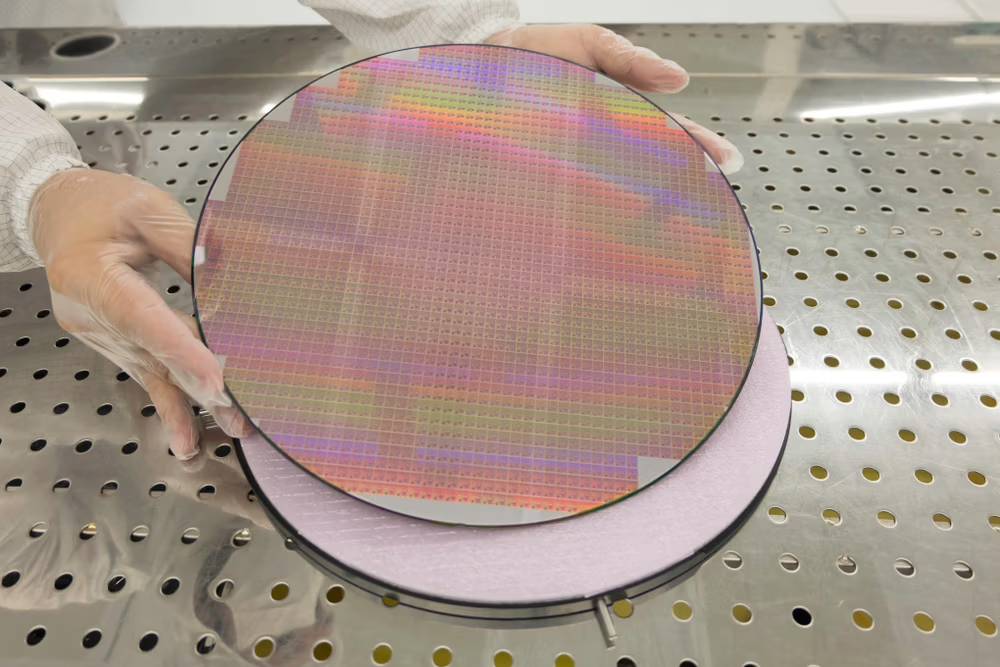
- Large-Scale Customization Capabilities: Leveraging industry-leading manufacturing techniques, Honway offers large-size BDD diamond materials with diameters up to 200mm, supporting custom geometric cutting to fit any integrated system design.
- One-Stop Engineering Value: From initial laboratory testing and process design to equipment fabrication, project implementation, and technical support, Honway helps enterprises slash chemical consumption and hazardous waste management costs, driving a successful low-carbon transformation.
🎯 Upgrade Your Electrochemical System with Premium Materials
Do not let frequent maintenance shutdowns and soaring hazardous waste disposal costs hinder your enterprise growth and ESG benchmarks. Honway’s Boron-Doped Diamond substrates and Advanced Electrochemical Oxidation Systems are your ultimate strategic assets for boosting yield and maintaining green compliance.
Explore Honway BDD Product Details & SpecificationsHonway Customer Success Office (Taiwan Headquarters HQ)
- · 📨 Corporate RFQ Inquiries: Click to immediately route to 【Contact the Honway Technical Projects Team】. Specify desired model codes (HW-261X / HW-661X) and targeted micrometer profiles. Our desk will assign a technical account manager within 24 business hours.
- · 📞 International Hotline: +886 7 223 1058 (Monday – Friday, 09:00 – 18:00, GMT+8)
- · 📱 Official Communications Channel: Access the Honway Group Corporate Facebook Feed for direct product engineering messaging.